
Our journey continues, looking at Ramps Around The World! This time, we travelled across the Atlantic to the USA, where one of our team members embarked on a road trip through Montana, Wyoming, Idaho, Utah, Nevada and California.
Between national parks, museums, famous film studios and everything else there was to see, there was still one thing an Easiaccess employee couldn’t help but notice… ramps!
Compared with some of the ramps we have encountered previously in this series, accessibility was clearly something that had been given a lot of consideration throughout the trip. We came across everything from portable aluminium ramps to permanent concrete installations and even access solutions designed to blend into the rustic surroundings of Yellowstone National Park.
Of course, accessibility requirements differ between the USA and the UK, and we can’t assess compliance or accurately measure features such as gradients from photographs alone. However, it is always interesting to see how different locations approach inclusive access.
Bozeman, Montana – US Bank
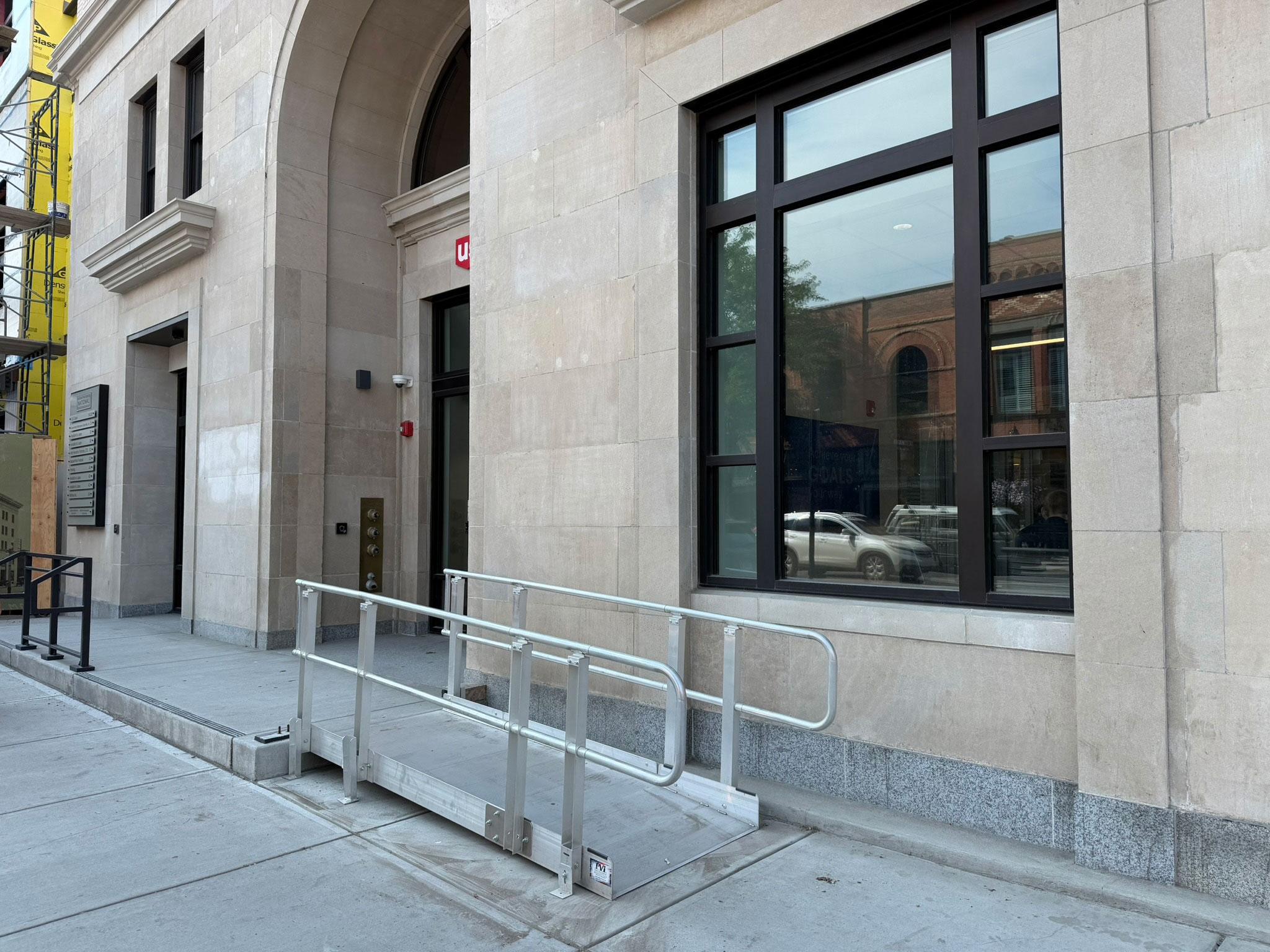
Our first ramp was spotted outside a US Bank on W Main Street in Bozeman, Montana.
From its appearance, this looks to be a PVI OnTrac Ramp, manufactured in the USA. The OnTrac is an all-aluminium ramp system featuring a grooved, slip-resistant surface and handrails. PVI describes it as durable, weather resistant and available in a range of lengths from 3ft to 10ft.
Looking at this particular installation, the gradient appears gradual and consistent, while the aluminium construction creates a clear, defined access route against the surrounding stonework and pavement. The ramp also includes raised edges and handrails along both sides, providing additional protection and support.
One thing we did notice, however, is that the secondary/mid rail doesn’t appear to continue for the full handrail arrangement. A more continuous rail design could potentially create a more consistent and enclosed route for users.
Overall though, it looked like a neat and relatively simple solution to providing access into the building – and a good start to our USA ramp spotting!
Bozeman, Montana – Museum of the Rockies
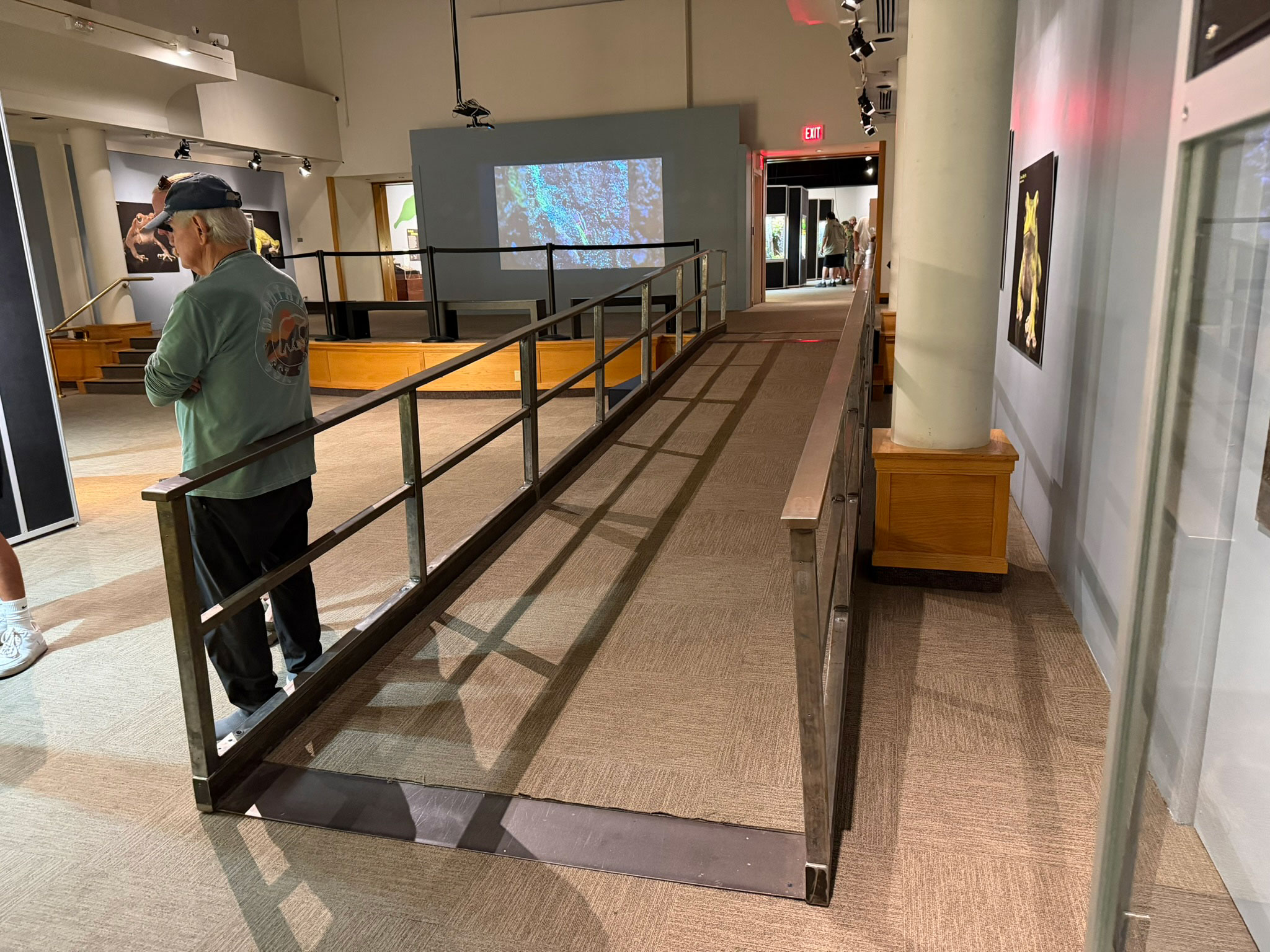
We didn’t have to travel far before finding our next example, this time inside the Museum of the Rockies in Bozeman.
Unlike our first ramp, this appears to be a completely bespoke and permanent installation, providing a long, gradual route between two different floor levels within the museum.
Metal railings run along both sides of the ramp, while the surface has been carpeted to match the surrounding museum floor. This helps the ramp blend naturally into the exhibition space rather than looking like something that has simply been added afterwards.
The relatively wide route also creates plenty of space for visitors to travel along it, and its positioning means it becomes part of the natural route through the museum.
It’s a good example of accessibility being incorporated into a public building without the ramp necessarily becoming the main visual feature of the room.
Yellowstone National Park – Norris Geyser Basin Museum
Next, we travelled south into Yellowstone National Park, Wyoming, where there were plenty more ramps for us to investigate!
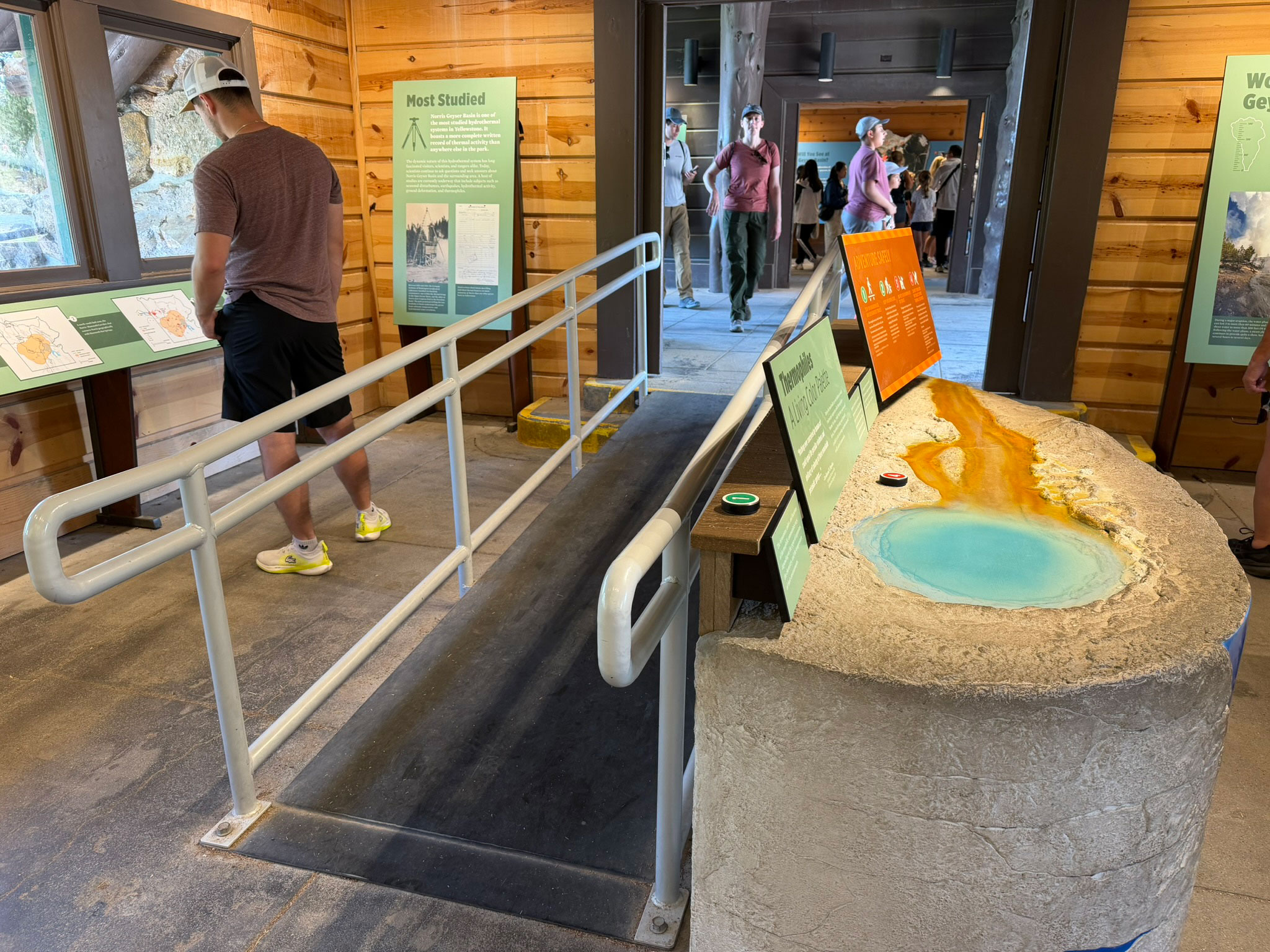
Our first Yellowstone example was inside the historic Norris Geyser Basin Museum. Completed in 1930 as a “trailside museum”, the building now contains exhibits explaining Yellowstone’s geothermal activity and the life found within its thermal areas.
Inside the museum, a ramp provides an alternative route alongside a small set of steps, leading visitors down towards the displays.
The ramp features a dark, solid surface which contrasts clearly with the lighter floor surrounding it, along with painted metal handrails on both sides. The light-coloured handrails are also easy to distinguish against the darker ramp surface.
We particularly liked that the accessible route sits alongside the stepped route rather than taking visitors away from the main exhibition area. It means everybody can continue through the same space and experience the displays together.
For a historic building dating back almost a century, it was positive to see accessibility incorporated into the visitor experience.
Yellowstone National Park – Lake Lodge Cabins
Our next Yellowstone ramp was very different.
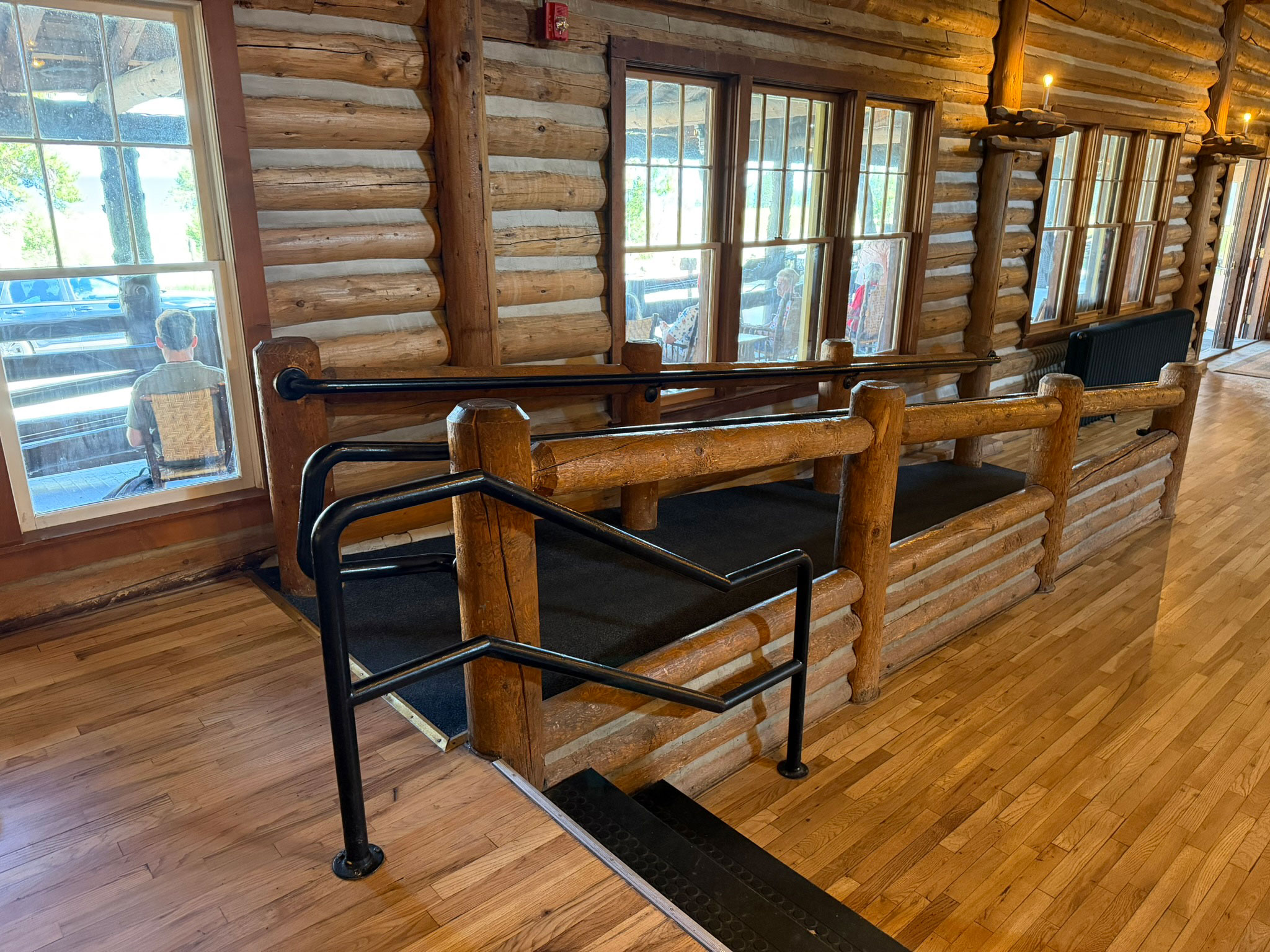
This one was found at the Lake Lodge Cabins near Yellowstone Lake, where the access solution had been designed to complement the rustic appearance of the building around it.
Rather than using conventional metal guarding throughout, large timber logs form the sides of the ramp, matching the log-cabin construction of the lodge itself. A dark carpeted surface then creates the route along the ramp.
Importantly, the rustic appearance hasn’t meant relying on timber alone for support. Smooth metal handrails have been incorporated within the log structure, providing a more practical surface for users to grip as they travel along the ramp.
The ramp also sits directly alongside a short set of steps, allowing both routes to arrive at the same level.
This was probably one of our favourite examples from the trip aesthetically. It demonstrates that an accessible solution doesn’t necessarily have to look out of place, even within a building with a very distinctive architectural style.
Salt Lake City, Utah – Farmers Market
After leaving Yellowstone, our next ramp was spotted at a farmers market in Salt Lake City, Utah.
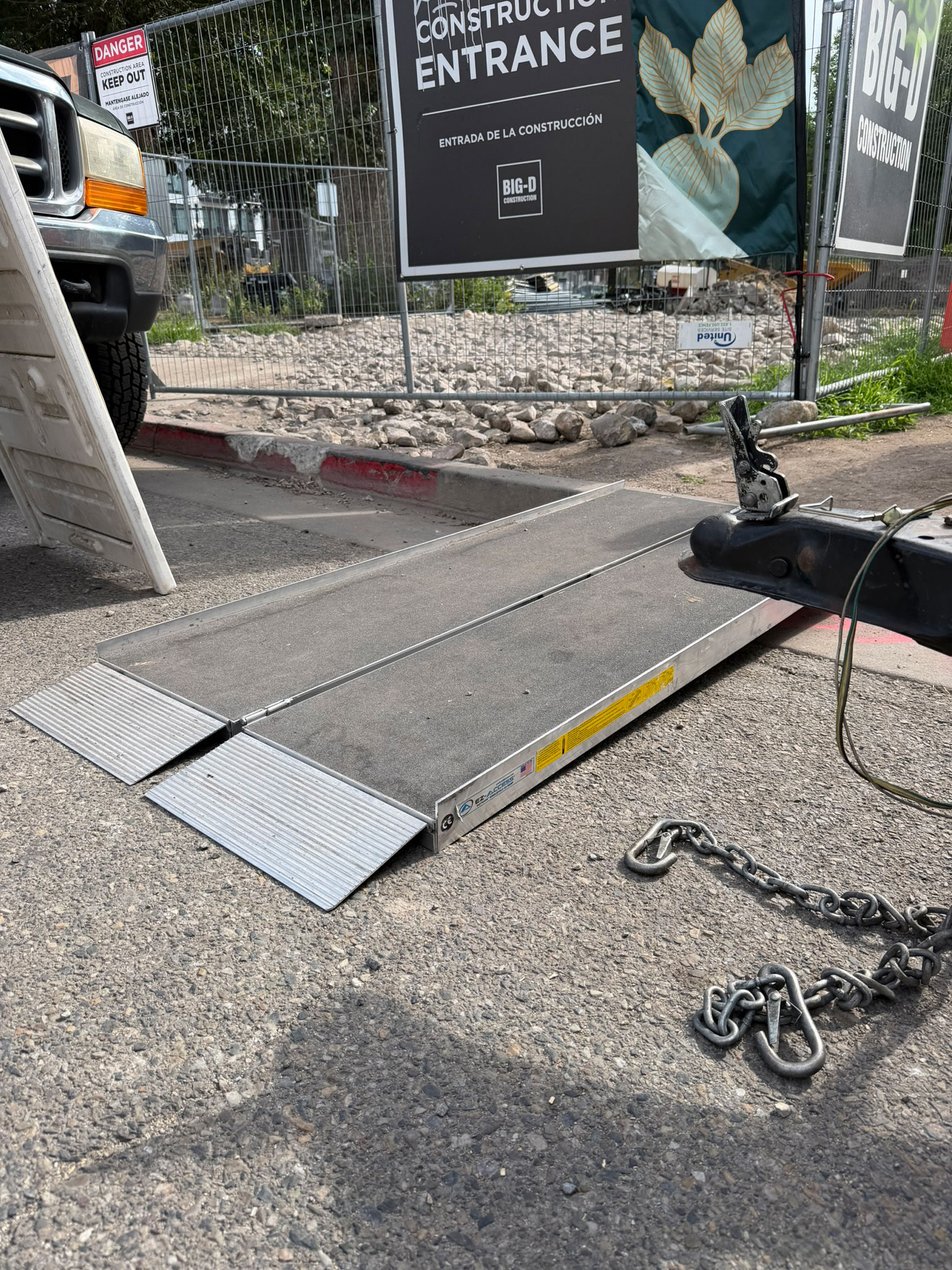
This time we found something a little closer to the products we are used to seeing, a portable aluminium ramp.
The ramp was manufactured by EZ-ACCESS which, despite the very familiar-sounding name, is definitely not Easiaccess!
The market featured stalls positioned along the road alongside a raised park area, meaning visitors needed to negotiate the kerb when moving between the two. This portable ramp had been positioned to create a simple accessible route between them.
The design featured a dark slip-resistant surface, aluminium construction and raised edges along either side of the ramp.
It’s a relatively straightforward solution, but an important one. Temporary events can easily create accessibility problems because roads, pavements and other spaces are suddenly being used in completely different ways.
Providing a portable ramp meant wheelchair and mobility scooter users could move between the different areas of the market without having to search for another accessible route.
Sometimes the simplest solutions can make a big difference.
Warner Bros. Studio Tour – Burbank, California
Next stop… Hollywood!
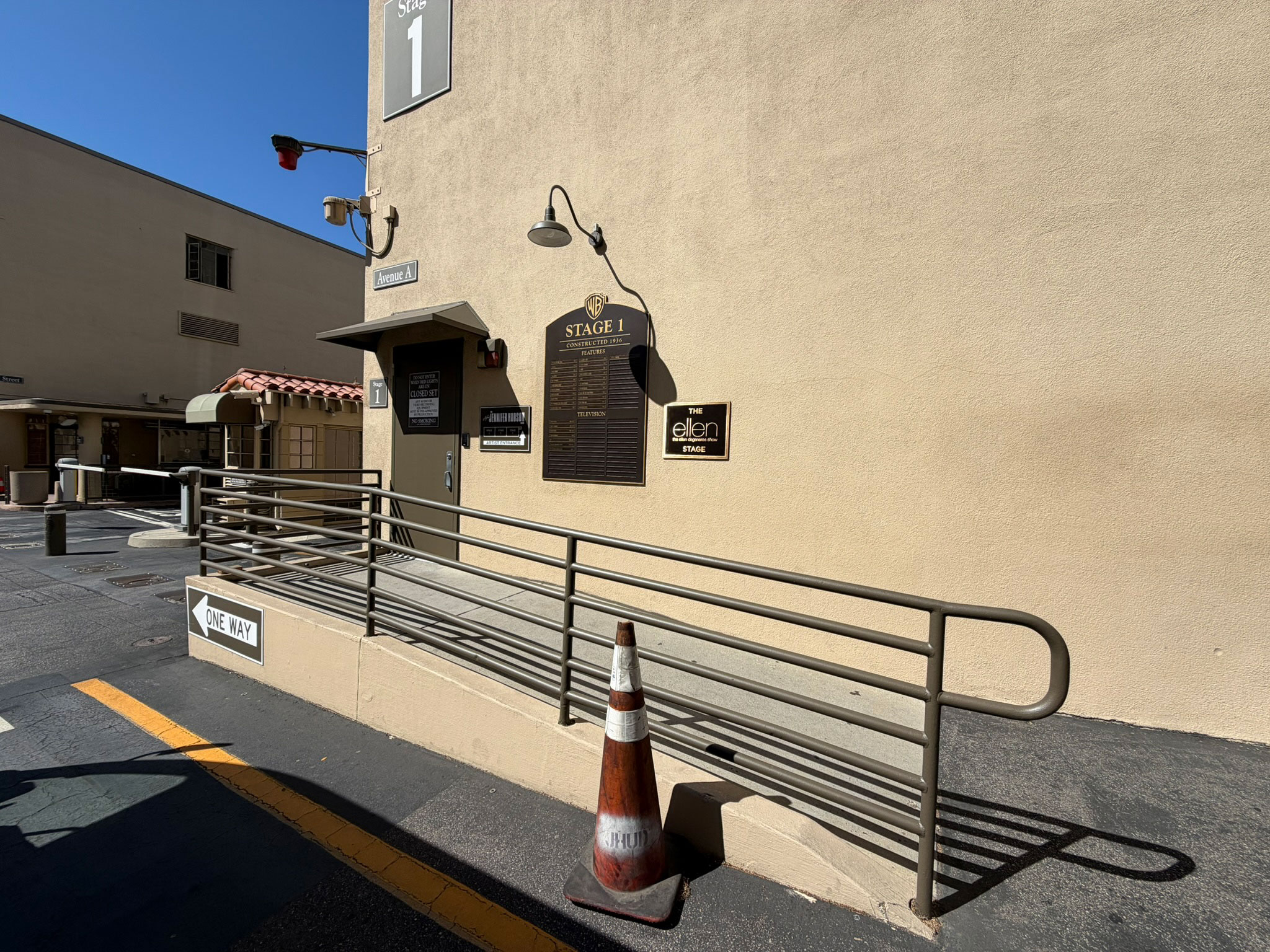
During a visit to the Warner Bros. Studio Tour in Burbank, California, our ramp radar was activated once again outside the famous Stage 1.
Stage 1 has a significant television history, having previously been used for The Ellen DeGeneres Show. Today, it is used for The Jennifer Hudson Show, which continues to be produced at Warner Bros. Studios.
While everyone else might have been interested in the television history, naturally we were looking at the ramp!
This example is a permanent concrete installation that has effectively been incorporated into the side of the building. The long ramp gradually rises towards a level platform outside the Stage 1 entrance, while metal guarding and handrails run along its exposed side.
The rounded return at the bottom of the railing also creates a neat finish to the installation.
Compared with some of the more obvious modular and portable solutions we had seen earlier in the trip, this ramp almost disappears into the architecture of the building. It’s a good example of accessibility being considered as part of the building itself rather than requiring a separate structure.
Probably not what most people photograph while visiting Warner Bros. Studios… but we couldn’t exactly walk past it!
Los Angeles, California – Metro Free Restroom
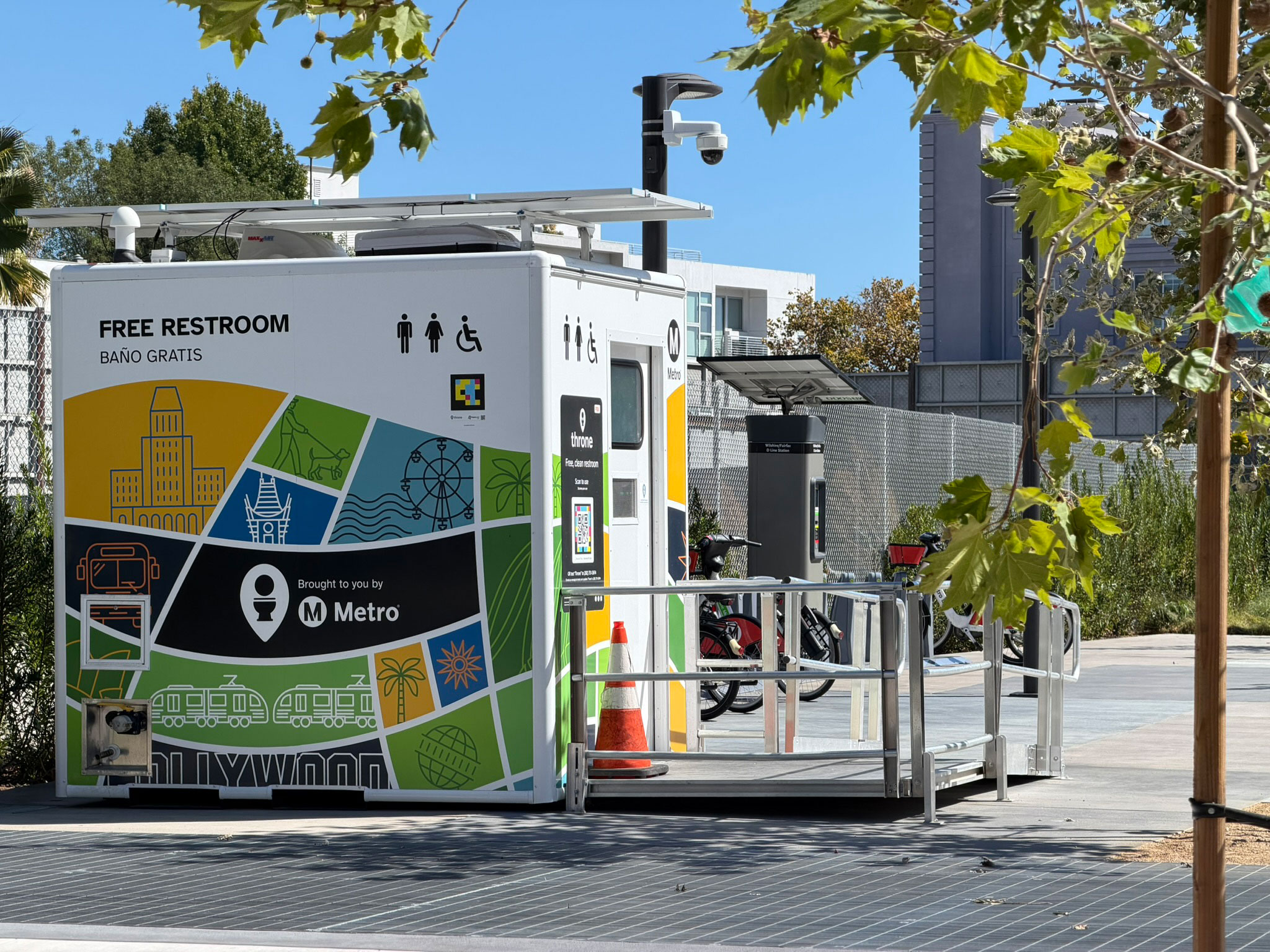
Our final ramp was spotted in Los Angeles, California, providing access to one of Metro’s free public restroom facilities.
Interestingly, we almost came full circle.
The aluminium ramp looks very similar to the PVI OnTrac system we spotted at the very beginning of our journey in Bozeman, although without seeing the manufacturer’s information we can’t confirm the exact system.
The ramp leads onto a level platform outside the entrance, with aluminium handrails providing a defined route around the facility. The dark ramp surface also creates a noticeable contrast against the aluminium structure and surrounding pavement.
What makes this example particularly interesting is that the restroom itself is a modular, standalone facility.
Using an aluminium ramp and platform system alongside a building like this makes a lot of sense. The access solution can complement the temporary or relocatable nature of the structure without requiring the same level of permanent construction as a concrete ramp.
It was another positive example of accessibility being considered even where the building itself isn’t a conventional permanent structure.
Conclusion
After travelling through Montana, Wyoming, Utah, Idaho, Nevada and California, one thing that really stood out was just how frequently accessible routes had been considered.
We found ramps at a bank, museum, national park, lodge, temporary farmers market, television studio and even a standalone public restroom.
More importantly, there wasn’t a one-size-fits-all approach.
We saw lightweight aluminium systems, permanent concrete ramps, bespoke internal installations and even a ramp carefully designed to complement the traditional log construction of a Yellowstone lodge.
There were certainly elements that we might approach differently, and it isn’t possible to fully assess any of these installations without measurements and further information. However, compared with some of the locations we’ve visited previously for Ramps Around The World, the overall impression of accessibility in the USA was very positive.
It was particularly good to see accessible routes being considered not only at major tourist attractions and public buildings, but also at temporary events and smaller facilities where they could easily have been overlooked.
Overall, the USA definitely provided some of the best examples we’ve seen so far in our Ramps Around The World series.
Now the only question is… where will our ramp radar take us next?


Contact
Request a free survey and quote or discuss what product and service is best for you.
Make Enquiry