
Our journey continues, looking at ramps around the world! This time, we travel to Malta where one of our colleagues took a deserved break to go on holiday to relax. Between the sunshine, history and scenery, there was still one thing that an Easiaccess worker couldn’t ignore… a ramp!! They couldn’t resist the temptation to send home some photos on how Maltese ramps compare to UK ramps.
Different country’s approach their ramp safety and accessibility laws in different way, varying the regulations and rules for installing ramps to the public. This means they often differ to ramps in the UK (sometimes not for the better). However, it is interesting to see how they stand up against our modular design, and how they look in a real world setting.
St. Julians – Irish Bar
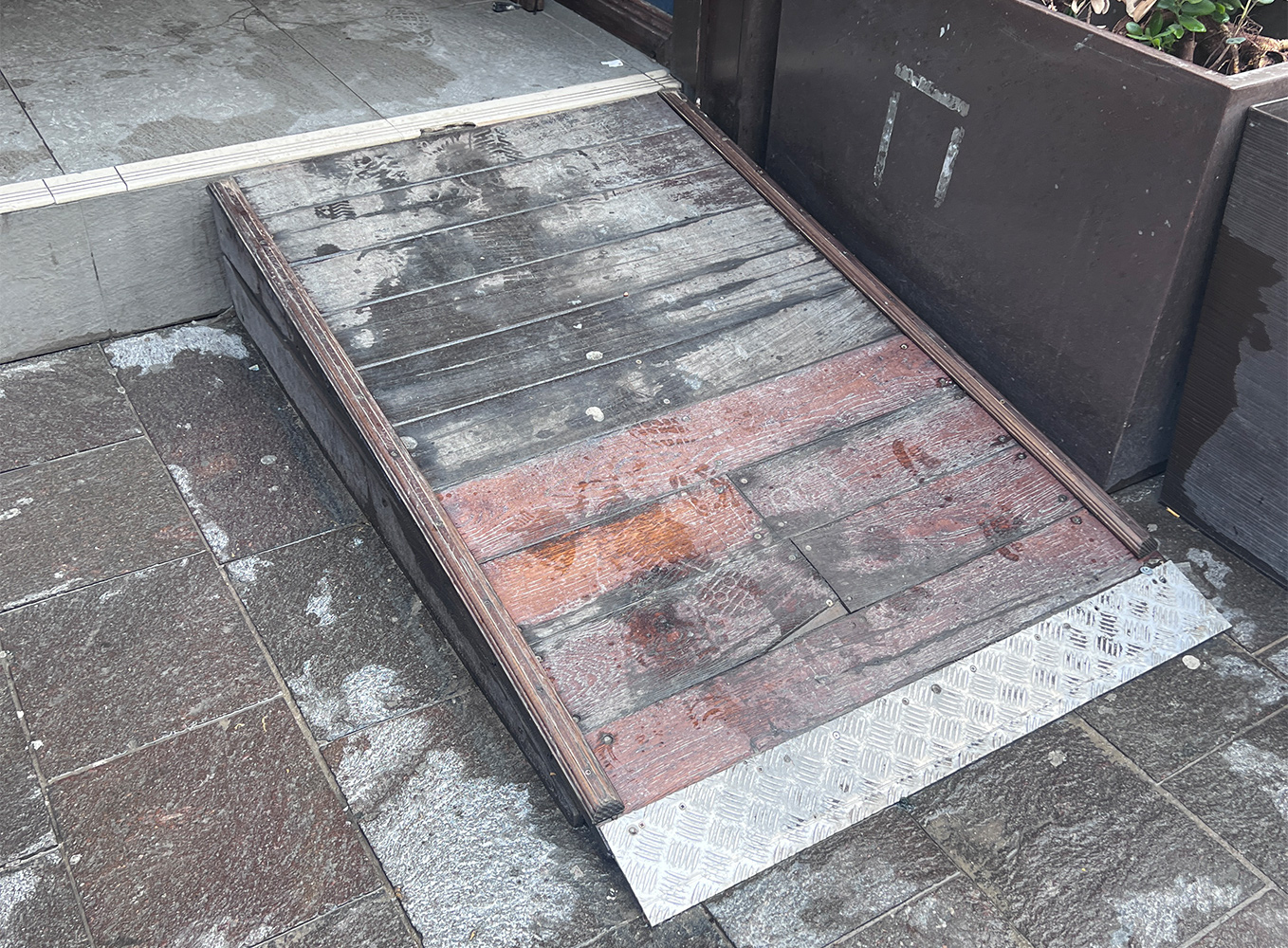
Spotted in the wonderful town of St. Julians, this ramp helped people up and over a threshold and into an Irish bar(where our colleague was just passing by😉). This is a good attempt at improving public accessibility but there could be a few improvements.
At first glance, the gradient appears manageable, and the addition of a transition plate helps create a smoother entry onto the ramp. There’s also a small kerb edge, which shows some consideration for user safety.
However, surface choice is where this ramp may fall short. In dry conditions it may provide a steady grip underfoot, but in wetter weather, the lack of grip could quickly become an issue. Slip resistance is a key factor in ramp design, particularly in busy or outdoor environments where conditions can change quickly.
Another improvement could be the addition of handrails. For users who are less steady on their feet, handrails provide a way of offering stability and balance to give them that helping hand which adds a large amount of confidence and independence to the user.
Ancient Walled City Of Mdina
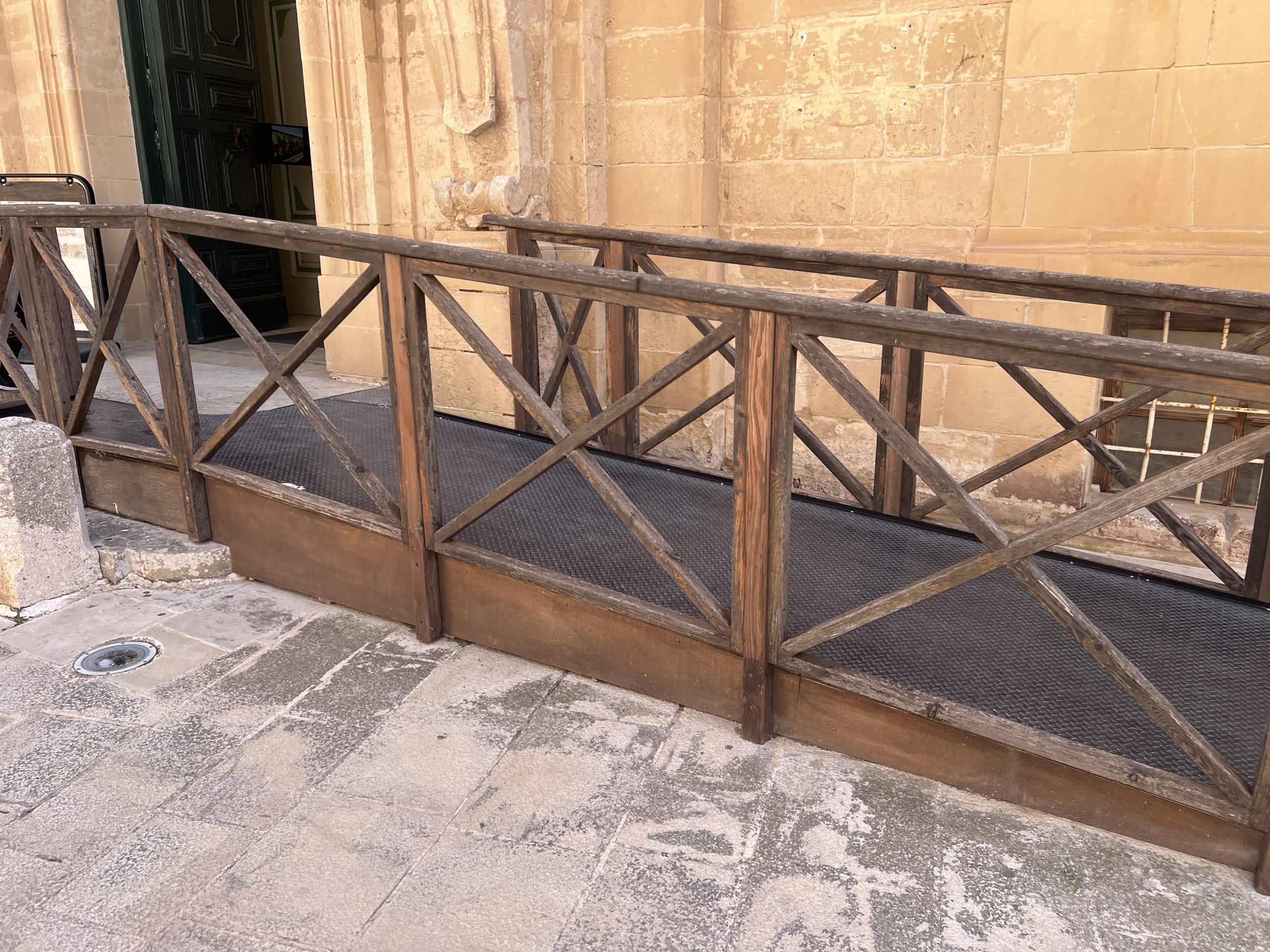
Our next stop was photographed in the walled city of Mdina, which is affectionately known as the “silent city”. It is a 4,000-year-old fortified, car-free medieval town in the island’s centre, famed for its narrow, winding streets, baroque architecture, and panoramic views.
This ramp shows a more considered approach to safety. The structure appears rigid, and the inclusion of handrails improves usability by offering additional support and stability and the gradient looks consistent. This definitely improves access to the public place and allows people with mobility challenges, easily access this building.
However, there are still areas where performance could be enhanced. Even thought the surface has a level of grip, there could be problems in wetter conditions. Water can easily start to pool and collect on closed surfaces, which then leads to potential slip hazards, which is never good on ramps.
The timber handrails, while functional, may not provide the same smooth, continuous feel that users benefit from when moving along a ramp. Over time, materials like timber can wear, crack and splinter and this can cause the handrail to become uncomfortable and uneasy to use.
An issue with timber ramps is the short life span they require regular maintenance to keep up improved safety. If they are not looked after properly they could lead to accessibility and safety problems.
Conclusion
It is always interesting to see how other countries and cultures approach accessibility and how this differs from our own. While different rules and regulations apply compared to the UK, it is clear that Malta still demonstrates consideration for improving access.
These two ramps show a clear intent to support people with mobility needs; however, there is certainly room for improvement. Additional features such as continuous handrails and high-grip surfacing would significantly enhance safety and usability, particularly in changing weather conditions.
Overall, these aren’t the worst ramps we have seen in our ‘ramps around the world’ series, but they still have lots of room for improvement.


Contact
Request a free survey and quote or discuss what product and service is best for you.
Make Enquiry